Frostmed — vaccine cold-chain container with MQTT fleet visibility
Constraint
The box they were trapped in
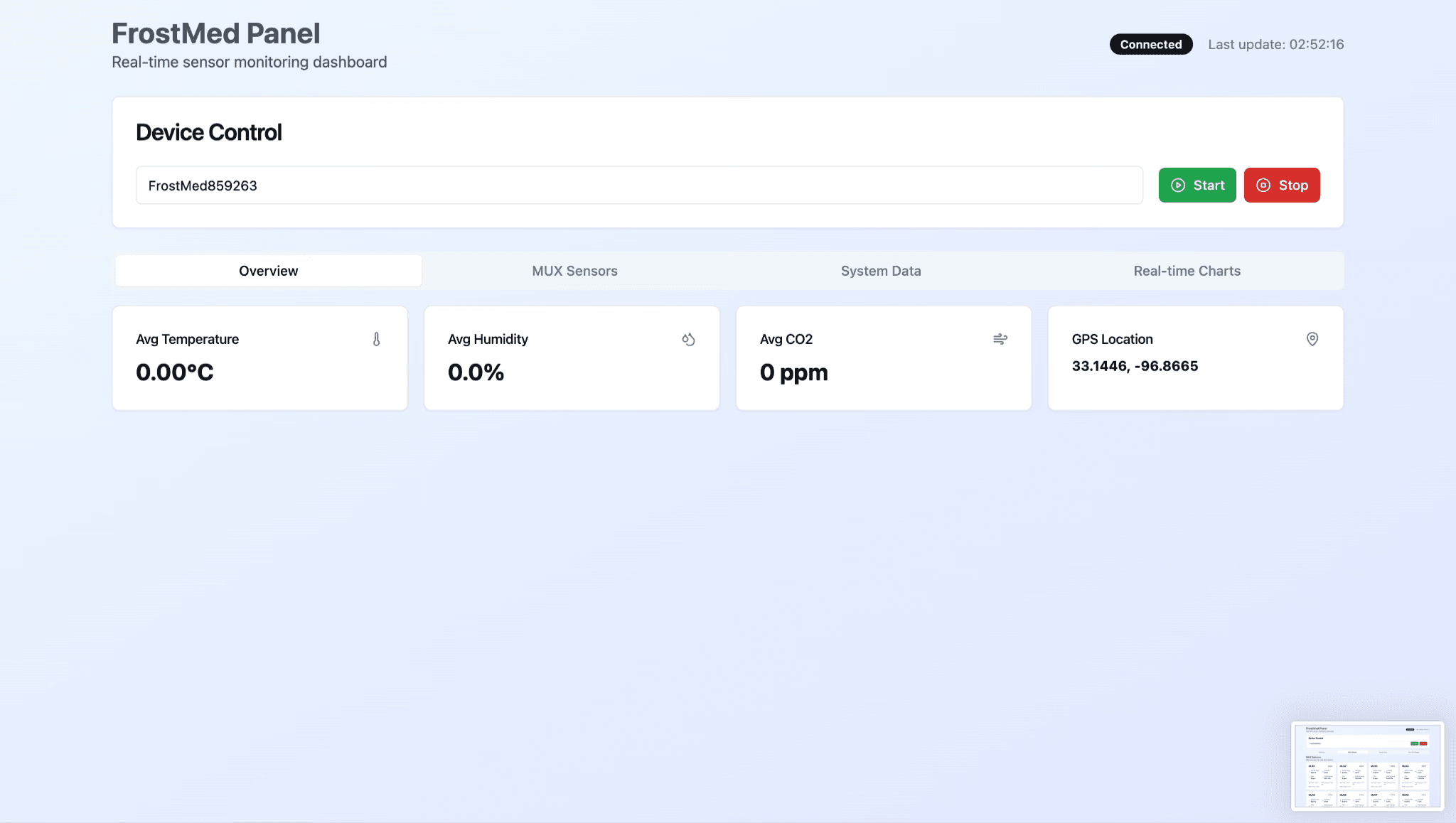
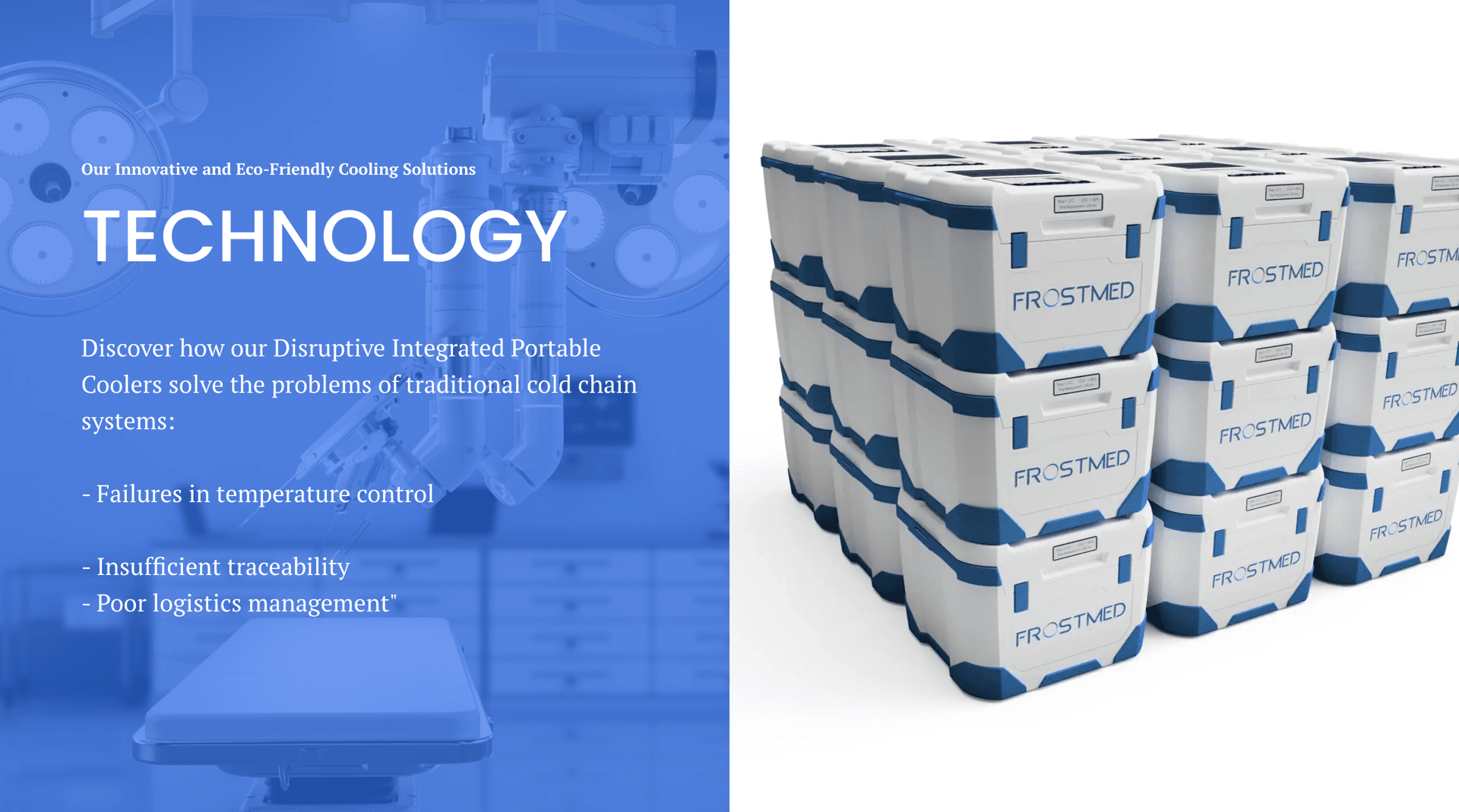
Frostmed needed a portable cold-chain container that holds vaccines inside a strict temperature window through a transit chain — vans, motorbikes, planes, anything — and gives the logistics team real-time visibility while it's moving. The container has to run off battery, hold its setpoint regardless of ambient, and let an operator confirm conditions either through the web portal at base or directly on the unit when there's no signal.
Approach
How we attacked it
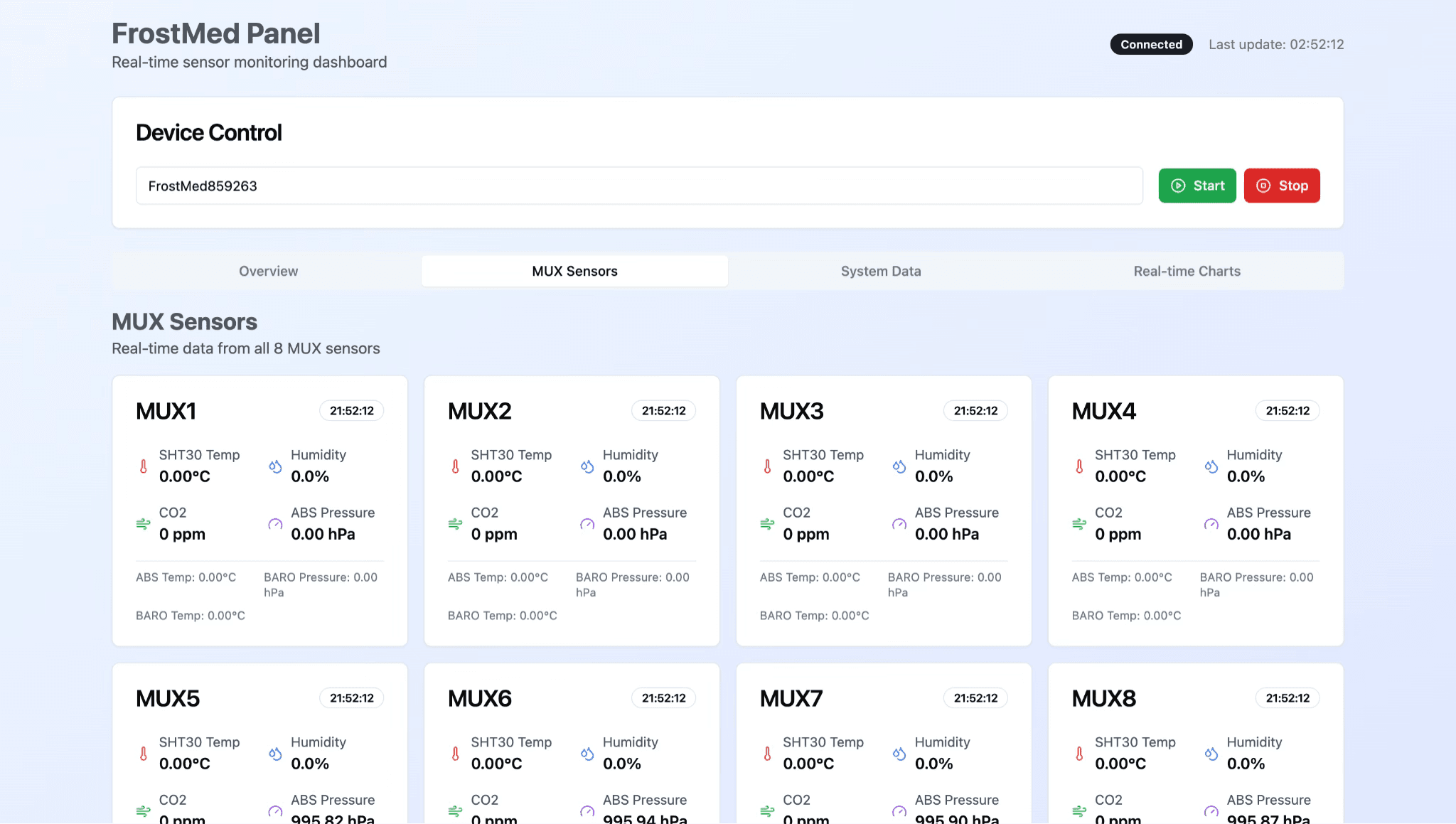
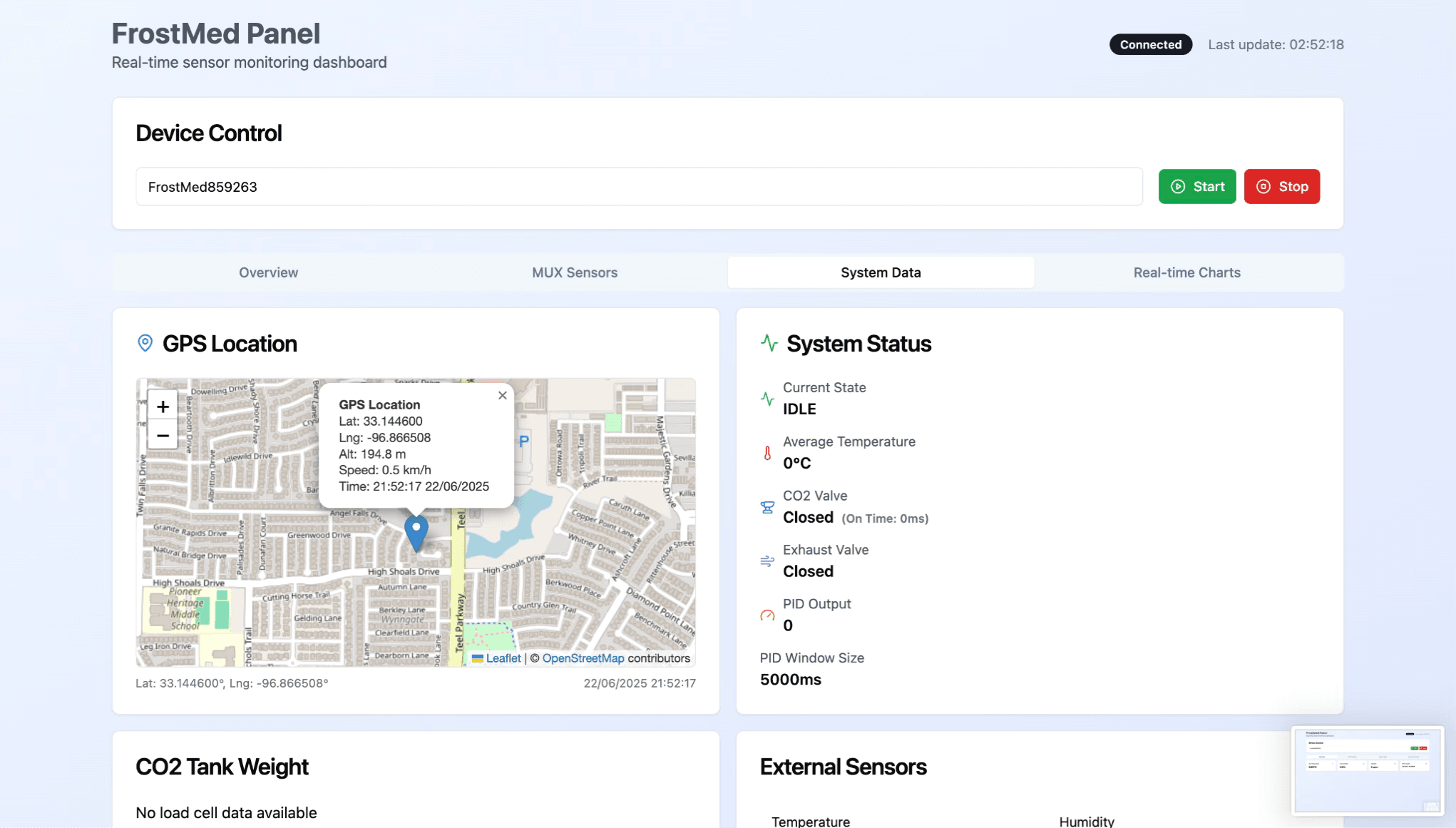
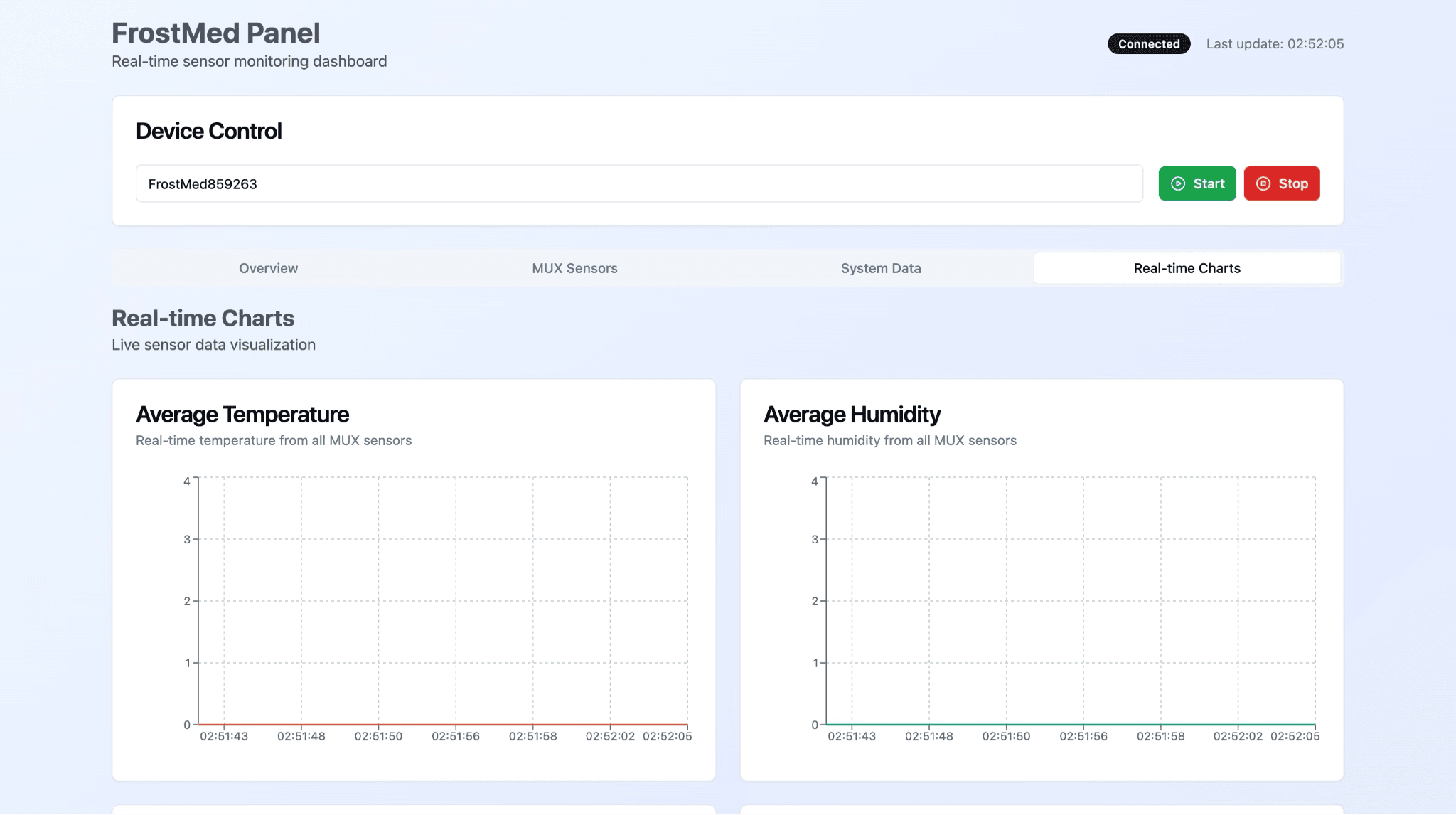
ESP32 (Arduino on PlatformIO) running a PID loop on a CO₂-cylinder valve for active cooling, with continuous temperature, humidity, and CO₂ monitoring on I²C and analog interfaces. Wi-Fi MQTT pushes telemetry to the cloud for fleet ops; BLE handles local control and diagnostics from a phone when the container is out of cell range. An E-Ink display shows live readings without burning the battery, and onboard buttons cover basic interaction without needing an app at all. Custom PCB integrated into the rugged container shell.
Decisions
What we picked, and what we rejected
Active CO₂-cylinder cooling over Peltier or compressor
A vaccine transit container cycles cold-warm-cold across a delivery route, and that duty cycle eats Peltiers' lifetime and shortens compressor seals. CO₂ regulated through a valve gives the cooling capacity on demand without a moving thermal element — better serviceability for a unit that has to live in the back of a logistics van.
MQTT for cloud fleet ops, BLE for local diagnostics
MQTT lets the central logistics team see every container in real time when the units have signal. BLE means the field operator can pair their phone in minutes when there's no cell — same diagnostics, no internet dependency. Two transports, one device.
E-Ink display over an LCD
The container sits in a vehicle for hours with someone glancing at it occasionally. An LCD's backlight burns battery that should be keeping vaccines cold; E-Ink reads fine in normal light, holds the last frame at zero power, and survives the drop tests a transit container has to pass.
Onboard buttons + display, not an app-only UX
Pharma logistics doesn't always have a phone in hand and isn't always trained to install an app for one task. Onboard controls let any operator confirm setpoints and check the live read without pairing — and the BLE/web layers stay above that, not in front of it.
Trade-off
What we didn't build
We left passive insulation engineering off our scope — Frostmed owned the container shell, and we designed the PCB and sensor placement around the thermal model the shell defined. We also stayed out of the cellular path: the deployment is Wi-Fi at the depot and BLE-to-phone in the field, which kept the BOM and the certification surface narrower than a worldwide cellular module would have. The trade-off is that a unit truly out of Wi-Fi range relies on the operator's phone over BLE — a deliberate call for a vehicle-bound product, not the right call for one that ships solo.
Outcome
What changed after we shipped
A vaccine container that holds its temperature window through real transit conditions and lets the logistics team see every unit in real time through the web portal. Field operators check the same data on the unit's own E-Ink display when there's no signal. Live at https://frostmed.com.
Talk to us
Have a similar project in mind?
Tell us what you're working on. We'll let you know whether it's a fit.